Loading...
Serving Sherman, TX and surrounding areas. (903) 294-5640
If your home has gaps around pipes, fixtures, and framing, conditioned air leaks out and hot Texas air pushes in. We find the leaks and seal them so your HVAC actually keeps up.
Air sealing services in Sherman, TX means finding every gap, crack, and opening in your home's outer shell and plugging them - stopping outside air from getting in and conditioned air from leaking out, with most homes addressed in one to two days depending on size.
Most homeowners assume windows and doors are the main culprits, but the biggest leaks are usually in the attic - around the tops of interior walls, recessed light fixtures, and plumbing penetrations. These are spots you would never see from your living room. Homes built in Sherman before 1990 were almost never air sealed during construction, which means those gaps have been costing you money every month since you moved in.
Air sealing works best when combined with insulation upgrades. Think of it this way: insulation slows heat from transferring through your walls and ceiling, while air sealing stops air from bypassing the insulation through gaps entirely. That is why we often pair air sealing with basement insulation or attic air sealing to make sure both problems are addressed in a single visit.
If your bill jumps to uncomfortable levels every June through August - even when you keep the thermostat at a reasonable setting - your home is likely leaking conditioned air. Sherman's triple-digit summer heat means your air conditioner is already working hard; if it runs almost constantly and the house still feels warm, air leaks are often the reason.
If one bedroom is always stuffy in summer or one corner of the living room is drafty every January, that is a classic sign air is moving through gaps rather than being controlled by your HVAC system. This is especially common in older Sherman homes where attic hatches, recessed lights, and wall penetrations were never sealed.
Sherman sits in a region with significant seasonal pollen loads. If you find yourself dusting more than seems reasonable, or your allergy symptoms are worse indoors than out, outside air may be infiltrating through gaps. Dust accumulating near baseboards, outlets on exterior walls, or around ceiling fixtures is a visible sign air is finding its way in.
In a North Texas summer, an unsealed attic can reach extreme temperatures. If that superheated air leaks down into your living space through gaps in the attic floor, your upstairs rooms will not cool down properly no matter how hard the AC runs. If your upstairs is consistently harder to cool than the rest of the house, unsealed attic penetrations are very likely part of the problem.
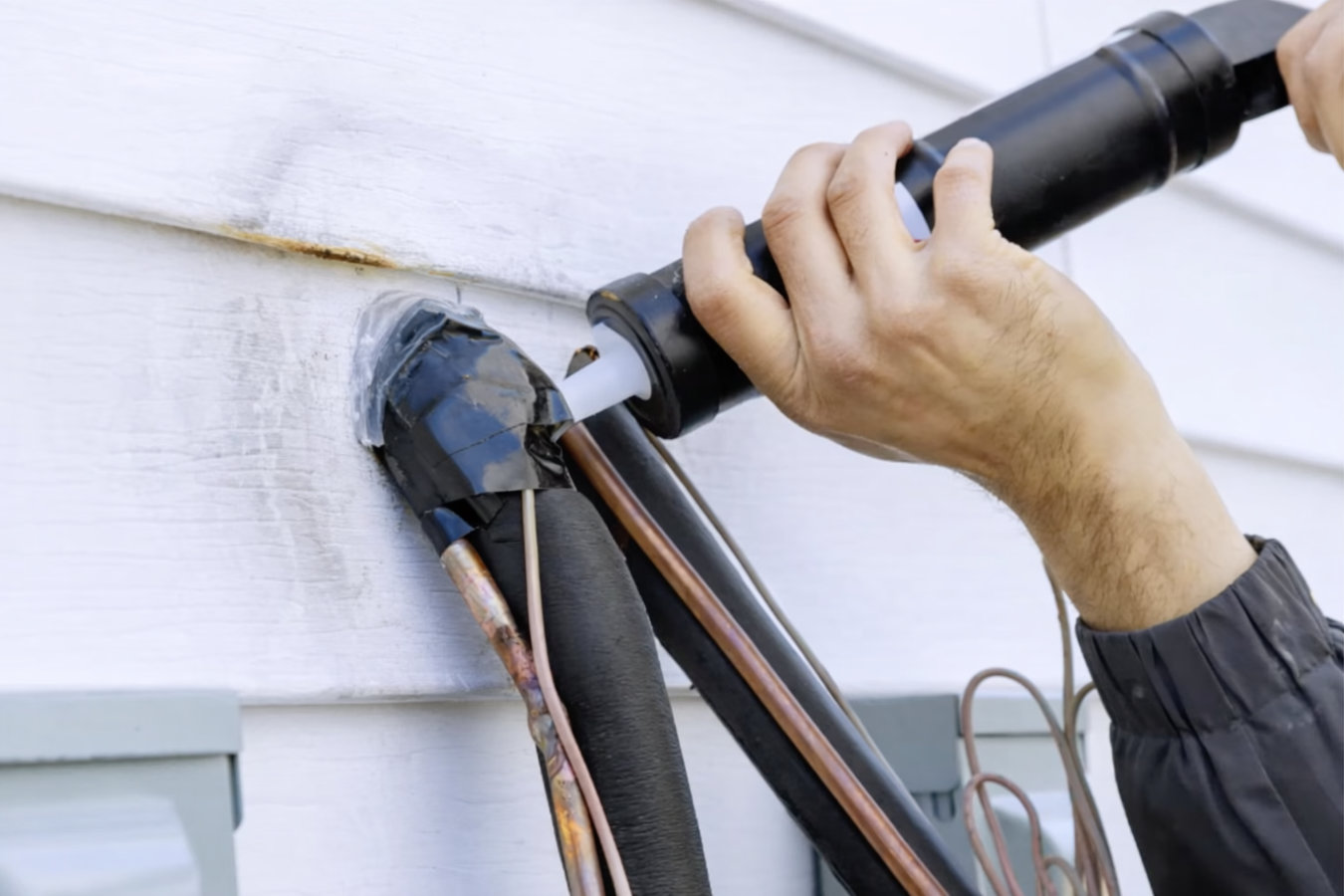
We start with a diagnostic approach - a blower door test that depressurizes your home so air rushes in through every gap, making leaks easy to locate with a smoke pencil or thermal camera. Once we know exactly where the problems are, we seal them using foam, caulk, or rigid blocking depending on the size and location of each opening. The biggest gains are usually in the attic - around top plates, recessed light fixtures, plumbing and electrical penetrations, and the attic hatch itself. We can also pair this work with attic air sealing as a focused, standalone service if your primary concern is the attic floor.
Air sealing also addresses crawl space and basement penetrations - anywhere pipes, wires, or ducts pass through the floor or foundation. These lower-level gaps are often overlooked but contribute meaningfully to overall air infiltration, especially in older Sherman homes. We frequently pair air sealing with basement insulation projects so both the thermal and air-infiltration problems are handled in one scheduled visit. After the work is complete, we run a second blower door test to show you the measurable improvement in real numbers before we leave.
Pre- and post-work depressurization testing to identify all air leak locations and measure the improvement after sealing is complete.
Sealing around top plates, recessed fixtures, plumbing and electrical penetrations, and attic hatches - the highest-impact area in most Sherman homes.
Closing gaps where pipes, wires, and ducts pass through lower-level framing, reducing air infiltration from below the living space.
Air sealing scheduled alongside insulation upgrades for homeowners who want to address both root causes of high energy bills in a single project.
Sherman's climate creates conditions where air leaks are particularly costly. Summer temperatures regularly exceed 95 degrees and can hit 100 or higher during July and August, and the gap between indoor comfort and outdoor heat is often 30 to 40 degrees for months at a time. Every gap in your home's shell is a path for that heat to travel directly into your living space. The U.S. Environmental Protection Agency notes that sealing air leaks is one of the most cost-effective energy improvements available for an existing home - a statement that carries extra weight in a climate as extreme as North Texas. Sherman also sees significant seasonal pollen from cedar, oak, and grass, and homeowners dealing with allergies often notice a real improvement in indoor air quality after air sealing is completed.
A large share of Sherman's housing stock was built between the 1950s and 1980s, before energy efficiency was a consideration in residential construction. Homes from that era have open gaps throughout their framing that have never been addressed. The Building Performance Institute - which trains and certifies home energy professionals - describes older homes as the highest-opportunity candidates for air sealing improvements. We regularly work with homeowners in Sherman and neighboring Gunter whose homes have never had this work done - and the results are consistently among the most noticeable of any energy upgrade.
We ask about your home's age, approximate square footage, and what has been prompting your concern - high bills, drafts, or uneven temperatures. We respond within 1 business day and schedule a visit at a time that works for you.
A contractor walks your home, checks the attic and crawl space, and runs a blower door test to measure exactly how much air your home is leaking and identify the biggest problem spots. This takes one to two hours and gives both of you a clear picture before any money changes hands.
The crew works primarily in out-of-the-way spaces - attic, crawl space, and lower-level framing - sealing gaps with foam, caulk, or rigid blocking. Most jobs take one to two days. You can stay home throughout; the contractor will let you know if any area needs to be temporarily cleared.
After sealing is complete, we run a second blower door test to show you the measured improvement in real numbers. You receive written documentation of the work - useful for utility rebate applications and for your records if you ever sell the home.
We assess your home, show you exactly what we find, and give you a written quote. No pressure, no obligation. Response within 1 business day.
(903) 294-5640A blower door test before the work tells us exactly where the leaks are. A second test after the work tells you the improvement measured in real numbers. A contractor who skips the diagnostic step is working blind - and you have no way to know whether the job made a meaningful difference.
We work regularly in Sherman's established neighborhoods - homes from the 1950s through the 1980s that were built without any air sealing whatsoever. We know where the gaps tend to be in homes of that era, which means we find them faster and miss fewer of them than a contractor without local experience in this specific housing stock.
Air sealing improvements to an existing owner-occupied home may qualify for a federal energy efficiency tax credit. We can tell you upfront whether the scope of work we are recommending meets the requirements, and we provide written documentation you can use when you file your taxes or apply for utility rebates.
Sealing your home raises a legitimate question: will it feel stuffy? We address this directly. A properly sealed home still gets fresh air - through your HVAC system's filtration rather than through uncontrolled gaps. If your home is sealed to a high standard, we discuss mechanical ventilation options to make sure the air quality improves rather than just changes.
The homeowners who get the most out of air sealing are the ones who had it done alongside insulation work - because the two improvements reinforce each other in ways neither one does alone. That is how we approach every project: find all the problems, fix them together, and show you the results in numbers before we leave.
A focused attic-only air sealing project targeting the highest-impact gap locations in your home.
Learn MorePair air sealing with basement insulation to address both infiltration and heat transfer from below.
Learn MoreSherman summers are expensive enough - schedule your air sealing estimate before the next heat wave and start saving on the bills that follow.