
Loading...
Serving Sherman, TX and surrounding areas. (903) 294-5640
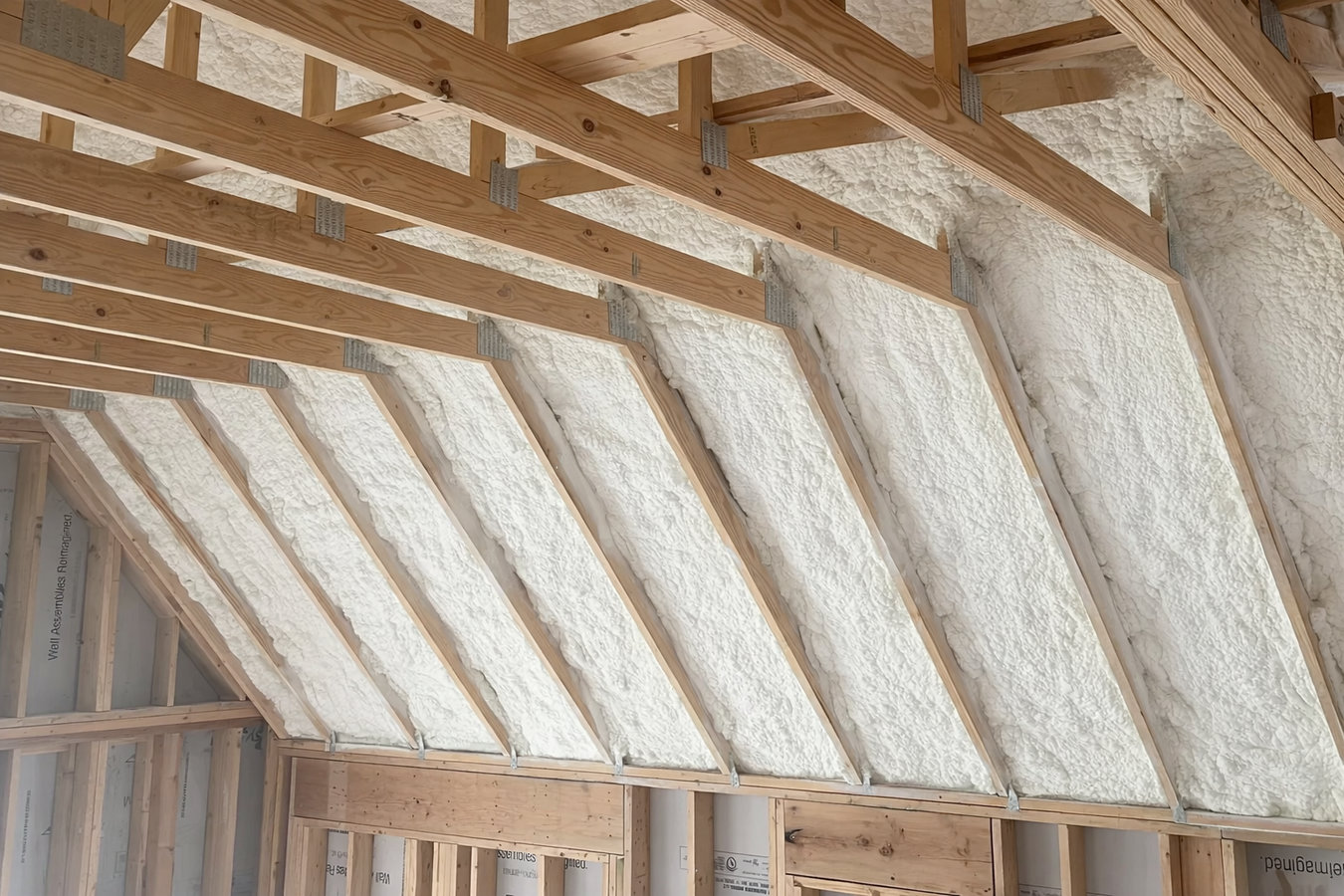
Fiberglass batts slow heat but leave air gaps wide open. Closed-cell foam seals and insulates at the same time - giving your AC a real chance to keep up with a Texas summer.
Closed-cell foam insulation in Sherman, TX is a two-part spray-applied material that expands on contact, bonds to the surface, and cures into a rigid airtight layer - most residential jobs take one to two days and the finished foam does not settle, sag, or need replacing.
Most homes in Sherman that struggle with high summer cooling bills are not just losing heat through walls and ceilings - they are losing conditioned air through gaps that standard insulation materials cannot reach. Closed-cell foam is different because it fills those gaps at the same time it slows heat transfer. It bonds directly to whatever surface it touches - concrete, wood framing, metal - and creates a continuous barrier without seams or compression points. Homes in Sherman's older established neighborhoods, where construction from the 1950s through 1980s left crawl spaces and rim joists essentially unsealed, tend to see the most dramatic improvement.
Closed-cell foam is often the best-performing choice for areas where moisture is also a concern, making it a natural fit alongside spray foam insulation for attics and walls where you want the full benefit of air sealing and thermal performance in a single application.
If your electric bill jumps dramatically from May through September and seems to climb a little each year, your home is losing conditioned air through gaps the current insulation does not address. Sherman's long, intense cooling season makes this pattern especially costly - and it is one of the most common and most fixable problems in older North Texas homes.
If a room - especially one under the roof or against an exterior wall - stays noticeably warmer than the rest of the house all summer regardless of the thermostat setting, heat is getting in faster than your system can remove it. In Sherman's summer heat, this almost always points to inadequate insulation or air sealing in the attic or wall cavities above that space.
If you notice a musty odor in the lower level, feel cool drafts near the floor in winter, or can detect light or outside air coming through gaps around pipes and the rim joist, outside air is moving freely into your home. Sherman's clay soils shift with moisture, and that movement opens up new gaps over time - even in homes that were reasonably tight when they were built.
Homes built in Sherman before modern energy codes were widely adopted were typically insulated to much lower standards than what is considered adequate today. If you have never had an energy audit or insulation upgrade, your crawl space, rim joists, and possibly your attic are almost certainly underperforming. This is especially common in the older neighborhoods closer to downtown Sherman.
We apply closed-cell foam to attics, crawl spaces, rim joists, basement walls, and individual wall cavities - wherever heat and outside air are finding their way into your home. For attic applications, we spray the underside of the roof deck to create a conditioned attic assembly, which keeps extreme summer heat from ever reaching your living space. This is more effective than laying insulation on the attic floor because it stops heat at the roof rather than allowing it to build up in the attic first. We also apply foam to open-cell foam insulation comparisons often come up in estimates - we walk you through which option makes more sense for your specific application and budget.
Crawl space and rim joist applications are particularly valuable in Sherman because they address the combination of air infiltration and moisture intrusion that Sherman's clay soils create. Closed-cell foam seals gap openings and resists moisture vapor at the same time, which is why it outperforms batts and loose fill in these locations. We also coordinate closed-cell foam work with broader spray foam insulation projects for homeowners who want to address multiple areas of their home in a single visit and minimize scheduling back and forth.
Sprayed to the underside of the roof deck to create a conditioned attic - the most effective approach for stopping summer heat gain in Sherman's climate.
Seals air infiltration and moisture entry points simultaneously - the right choice for Sherman homes where clay soil movement opens gaps around the foundation over time.
Applied to foundation walls where moisture is a concern, creating an insulated surface that also resists water vapor movement through the concrete.
For specific wall sections or new construction where maximum R-value per inch is needed and air sealing is a priority alongside thermal performance.
Sherman sits in Grayson County where summer temperatures regularly reach 100 degrees and the cooling season stretches from May through October. Attics in this climate can reach extreme temperatures on a hot afternoon, and standard batt insulation on the attic floor slows that heat but does not stop it from building up in the attic space first. closed cell spray foam applied to the underside of the roof deck keeps that heat from entering the attic at all - which is where the biggest difference in both comfort and energy use comes from. The Spray Polyurethane Foam Alliance maintains installation quality standards for spray foam applications that contractors who are members agree to follow - it is worth asking any contractor you consider whether they adhere to these standards.
Sherman's clay soils create a second challenge that closed-cell foam handles better than most other materials. The heavy clay in Grayson County swells when wet and shrinks when dry, and that seasonal movement can open small gaps around your foundation, rim joist, and crawl space - gaps that become pathways for both outside air and moisture. Closed-cell foam conforms to irregular surfaces and seals those openings, which is why it is especially practical for homes in and around Sherman and Van Alstyne where older homes sit on the same expansive clay soil that characterizes much of North Texas.
We will ask a few basic questions about your home - its age, which areas you want insulated, and whether you have noticed specific problems like high bills or moisture. This lets us arrive prepared rather than starting from scratch at the estimate visit.
We walk through the target areas - attic, crawl space, or walls - take measurements, and look for existing insulation and moisture issues. You receive a written estimate covering the area to be treated and the total cost before you commit to anything.
Before the crew arrives, clear the work area of stored items. You and your family - including pets - will need to leave the home for the duration of the spraying and for a period afterward, typically a minimum of a few hours. Your contractor will give you a specific re-entry time.
A thorough contractor will walk you through the finished work and show you the coverage before packing up. We provide documentation of what was installed and where - useful if you sell the home or ever need to confirm the work was done to a specific standard.
Free estimate. No obligation. We show you what we would do and why before any work begins.
(903) 294-5640Closed-cell foam has to be applied at a consistent depth to deliver its rated performance. We use a thickness gauge on every job and show you the results before we pack up - not because you asked, but because that is how you know the insulation you paid for will actually perform the way it should.
Grayson County's heavy clay soils create moisture and gap conditions that are specific to this area. We have worked in Sherman's crawl spaces and attics long enough to know what those conditions look like and how closed-cell foam needs to be applied to address them properly - not just in general terms.
The Spray Polyurethane Foam Alliance sets quality standards for how spray foam should be applied. We follow those standards on every job. That means consistent thickness, proper surface preparation, and correct re-entry times - the things that separate a job done right from one that just looks done.
The U.S. EPA provides specific guidance on spray foam application, ventilation requirements, and safe re-entry protocols. We follow those guidelines on every job - and we give you your specific re-entry time in writing before we start, so there is no guessing.
When you hire us for closed-cell foam in Sherman, you are getting a crew that verifies their own work, knows the local conditions, and leaves you with documentation. That is what makes the difference between a job that holds up for 30 years and one that creates problems down the road.
A lighter, more flexible foam option - covers large attic areas at lower cost per square foot when moisture resistance is less of a priority.
Learn MoreThe broader category that closed-cell foam belongs to - useful when comparing foam types across different applications in the same home.
Learn MoreSummer is the longest season here - the sooner your home is sealed, the sooner you stop paying for air that escapes before you can use it.